How to Keep Track of Gift Ideas All Year
The best gift ideas arrive in March and die by April. How to catch them when people drop hints, organize them by person, and walk into December stocked.
To keep track of gift ideas all year, write each one down the moment someone drops a hint: one line, attached to that person, not buried in a generic list. Then check the person's note before their birthday or the holidays. Capture in the moment, organize by person, harvest in season.
That's the system. Here is how to run it, including which hints are worth catching.
It's December 14th. You're staring at a note that says "gifts???" and a browser tab full of things nobody asked for.
Here's the painful part: you had the perfect gift for your sister this year. She handed it to you herself, in April, in a passing comment about her sketchbook falling apart. You even thought "that's her present." Then April became May, and by December the comment was gone, and now you're choosing between a candle and a gift card.
The problem was never your taste in gifts. It's that gift ideas arrive on a different calendar than gift buying, and nothing in your life bridges the gap.
Why Do Gift Ideas Disappear?
Two reasons, both fixable.
They arrive at random. The best ideas don't show up when you're shopping. They show up in February kitchen conversations and July car rides, months from any occasion. Your brain files them as pleasant conversation, not as actionable information, and lets them fade like everything else from that day.
They get stored by time, not by person. Even when you do write an idea down, it usually lands somewhere chronological: a note from March, a screenshot in your camera roll, a message you sent yourself. Come December, you'd have to excavate nine months of digital sediment to find it. Nobody does. The note from March might as well not exist.
Fixing the first takes a habit. Fixing the second takes a structure. Both are small.
The Capture Rule: When They Mention It, Write It Down
People tell you what they want constantly. Almost none of it sounds like a hint at the time:
- The broken thing. "My headphones are dying." "This sketchbook is falling apart." A complaint about an object is a gift idea wearing a disguise.
- The admired thing. They pick something up at a friend's house and say "oh, this is nice." That's not small talk. That's data.
- The new hobby. The moment someone starts climbing, baking, or birdwatching, a whole category of gifts opens up, and they're too early in to own the good stuff yet.
- The thing they won't buy themselves. "I've been eyeing it for months but I can't justify it." This is the gold tier. The entire point of a great gift is buying someone the thing their own practicality vetoed.
- The casual wish. "I should really get a proper knife." They will never get the proper knife. You can.
The rule is mechanical: hint lands, phone comes out within the hour, one line goes into that person's note. "Sketchbook falling apart, likes the big spiral ones." Ten seconds. You're not interrupting the moment; you're doing it after, the same way you'd catch any detail worth keeping.
Organize by Person, Not by Occasion
The spreadsheet people have this part right. Every workable gift-tracking system in the world shares one structure: a row per person, ideas accumulating beside their name.
Keep each entry useful with three things:
- The idea itself, in their words where possible. "Wants the Fellow kettle, the matte black one" beats "kettle?"
- The source, so you trust it later. "Mentioned at dinner in May" tells December-you this is real.
- The practical details that kill returns: sizes, colors, the model they already have.
That's it. No budget columns, no status fields, no project management. The system has to be light enough to feed in ten-second increments or it dies by Easter.
Where Should Gift Ideas Live?
Anywhere that's organized by person and that you'll still open in November:
- A notes app, one note per person, with a "gift ideas" line you add to all year. Free and frictionless. The risk is that nothing reminds you the note exists.
- A spreadsheet, if you genuinely love spreadsheets. People run decades of family gifting on one tab. Just be honest about whether you'll open it from your phone at a dinner table in July.
- A relationship app like Kinu, where gift ideas live next to everything else about the person: their birthday, the stories they've told you, the last time you talked. The reminder that their date is coming arrives with the list already attached. Capture the hint as a moment, harvest it when the gentle reminder fires.
This is the short version. The full roundup of every option, including the dedicated gift trackers and their risks, is in the best gift idea tracker apps. Wishlist apps like Giftster solve a different problem: coordinating lists people write about themselves, useful for big families at Christmas. What they can't hold is the April sketchbook comment, because your sister doesn't know she made it. The hint-catching has to be yours.
Whichever home you choose, the test is the same one as for birthdays: one place, always with you, checked at the moments that matter.
The December Payoff
Run this system from June and here's what December looks like: you open your people's notes and find a year of their own words waiting. The sketchbook. The kettle. The thing they couldn't justify.
Three things change immediately. The panic-buying stops, and with it the desperation spending on overpriced last-minute filler. The gifts start landing, because they were never your guesses; they were their wishes, captured and returned. And the reaction changes: when someone opens the exact thing they mentioned once in April, what they feel isn't "nice gift." It's "you were listening." Which is the actual present, and the same feeling every thoughtful gesture runs on.
Gift-giving stops being a December performance and becomes what it should have been all along: a year of paying attention, redeemed all at once.
If you want one private place where gift ideas, birthdays, and the little things people mention all live together, attached to the person and brought back when their date comes around, that's what Kinu was built for. Free for your first 10 people on iOS and Android.
Frequently Asked Questions
Free Reconnection Kit
Find your inner circle in five minutes.
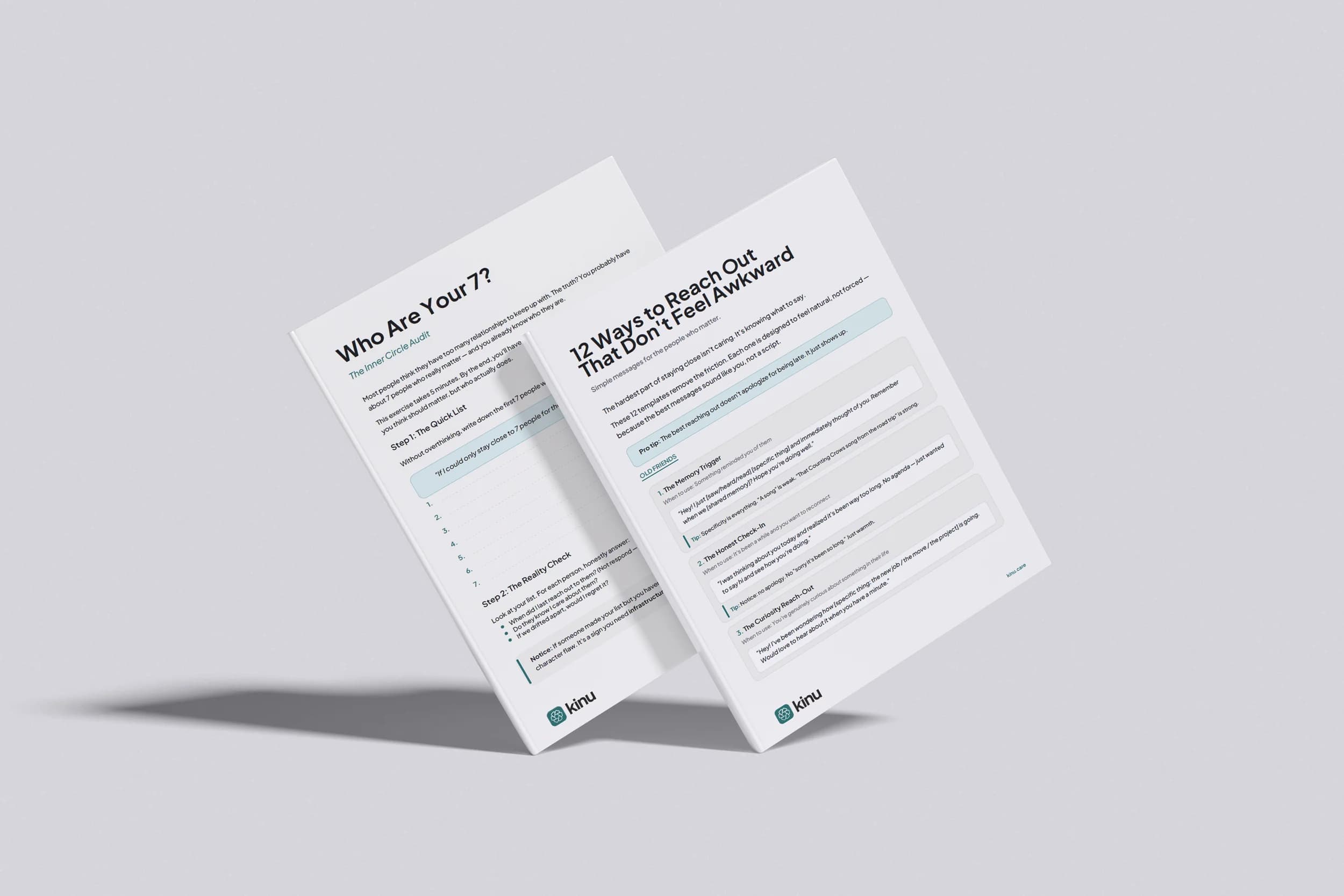
A 5-minute exercise to find your inner circle and 12 reach-out templates that sound like you. Free, instant download.
Instant download. No spam. Unsubscribe anytime.
Keep reading
How to Remember Names and Details About People You Just Met
Names vanish during the handshake because they were never stored. The five-second fix, the recovery scripts, and the note that turns a stranger into a person.
How to Remember Details About People
Why the details people share keep slipping, the attention habits that hold them in the moment, and the simple system that keeps them for years.
How to Remember Important Things About Your Friends
Practical systems for remembering the little things your friends share, why your brain forgets them, and the best apps for keeping those details safe.