Quiet quitting en redes sociales: cómo retirarte sin desaparecer
No tienes que borrar todo dramáticamente. Así puedes reducir silenciosamente tu uso de redes sociales mientras mantienes las conexiones que realmente importan.
Probablemente no vas a borrar dramáticamente todas tus cuentas de redes sociales, escribir un largo post de "me voy" y cabalgar hacia el atardecer de la vida intencional.
Y está bien. La mayoría de las personas que logran reducir su uso de redes sociales lo hacen en silencio. Sin anuncio. Sin dejar todo de golpe. Solo un retiro gradual que nadie nota realmente. Excepto tú.
Es el equivalente relacional de hacer quiet quitting en tu trabajo: no renuncias, solo dejas de dar más de lo necesario. Dejas de recorrer el feed. Dejas de publicar. Dejas de revisar los likes. Mantienes tu cuenta por el 3% de las interacciones que realmente importan y dejas ir el otro 97%.
Así puedes hacerlo sin perder las conexiones que te importan.
Por qué el quiet quitting le gana a la eliminación dramática
Es absoluto, y la vida no lo es
Probablemente necesitas algo de acceso a redes sociales para propósitos legítimos. Eventos. Coordinación de grupo. Visibilidad profesional. Marketplace. Borrar todo significa perder estas utilidades junto con el doomscrolling.
Es performativo, y lo sabes
El post de "me voy de las redes sociales" es, irónicamente, el pico del comportamiento en redes sociales. Centra la plataforma una vez más.
Crea una falsa dicotomía
No tienes que elegir entre "usuario activo diario" y "completamente fuera". Hay un enorme terreno intermedio del que casi nadie habla.
El quiet quitting funciona porque es sostenible. Mantienes acceso a lo que importa, pierdes lo que no, y nadie te envía un mensaje de "vi que desactivaste tu cuenta, ¿estás bien?"
La guía paso a paso del quiet quitting
Fase 1: Auditoría (1 semana)
Antes de cambiar nada, pasa una semana notando tu uso real:
- ¿Qué abres primero cuando tomas tu teléfono?
- ¿Cuántos minutos al día pasas en cada plataforma? (Revisa Tiempo de Pantalla / Digital Wellbeing para el número real. Siempre es más alto de lo que crees.)
- ¿Qué porcentaje de tu tiempo es intencional (revisar cosas específicas) vs. pasivo (¿hacer scroll)?
- ¿Qué interacciones te hacen sentir mejor? ¿Peor? ¿Neutro?
No te juzgues durante esta semana. Solo observa. Los datos te dirán dónde cortar.
Fase 2: Reduce el reflejo (semana 2-3)
Mueve las apps sociales fuera de tu pantalla de inicio. Entiérralas en una carpeta en la segunda o tercera página. Podrás encontrarlas cuando intencionalmente quieras, pero el toque automático del pulgar desaparece. Este solo cambio reduce el uso entre un 20-40% para la mayoría de las personas.
Desactiva todas las notificaciones no esenciales. Mantén los mensajes directos de amigos reales. Elimina todo lo demás: likes, comentarios, sugerencias de amigos, "tendencias", "personas que quizás conozcas". Cada notificación es un anzuelo diseñado para jalarte de vuelta.
Establece límites de tiempo diarios. Empieza generoso: 30 minutos por app al día. Puedes ajustar después. El objetivo ahora es hacer tu uso consciente en lugar de automático.
Fase 3: Reemplaza el hábito (semana 3-4)
Por cada comportamiento de redes sociales que reduces, necesitas un reemplazo. De lo contrario, el vacío se llena solo:
| Comportamiento anterior | Reemplazo |
|---|---|
| Scroll matutino | Leer un artículo de una lista guardada o newsletter |
| Scroll por aburrimiento | Enviar un mensaje a alguien con quien has querido hablar |
| Scroll nocturno | Libro, podcast o crucigrama |
| Revisar likes de tu publicación | Notar que publicaste para ti, no para validación |
| Ver historias/reels | Contactar directamente a una persona específica |
La idea clave: no estás eliminando conexión. Estás reemplazando conexión pasiva y algorítmica con conexión activa e intencional.
Fase 4: Establécete en la nueva normalidad (mes 2+)
Después de un mes, la mayoría de las personas encuentran que su uso se estabiliza naturalmente en un 10-20% de lo que era antes. Revisas redes sociales quizás una vez al día para propósitos específicos, pasas unos minutos y las cierras. Sin scroll. Sin feed. Sin agujeros de doomscrolling.
Lo que sorprendió a la mayoría: nadie notó que se habían retirado. El algoritmo simplemente mostró el contenido de otras personas. El mundo continuó. Y las relaciones que realmente importaban también continuaron, a través de mensajes de texto, llamadas y mensajes directos que no están mediados por un feed.
Manejando las plataformas específicas
Deja de seguir a todos excepto amigos cercanos y cuentas que genuinamente mejoran tu vida. Usa el feed de "Favoritos" exclusivamente. Borra la app pero mantén la cuenta (accede por navegador cuando lo necesites).
Twitter/X
A menos que sea genuinamente necesario para tu carrera, esta suele ser la más fácil de dejar por completo. La información que obtienes ahí está disponible en todas partes con menos toxicidad.
Mantenlo para Grupos y Marketplace si los usas. Deja de seguir (no eliminar) a todos en tu feed principal. Esto vacía tu feed mientras preserva tus conexiones.
TikTok
La más difícil de moderar porque el algoritmo está específicamente optimizado para "solo uno más". Los límites de tiempo son esenciales aquí. Mejor aún: borra la app y accede solo por navegador.
Mantén si lo necesitas profesionalmente, pero trátalo como el correo: revísalo una vez al día, responde a mensajes directos y sal. El feed se está volviendo cada vez más irrelevante.
La red de seguridad para la conexión
El mayor miedo al reducir las redes sociales: "¿Y si pierdo el contacto con la gente?"
Este miedo es mayormente infundado porque:
Las personas que importan lo notarán
Si alguien genuinamente se preocupa por ti, tu ausencia de su feed no terminará la amistad. Se comunicarán.
La comunicación directa es mejor
Un mensaje de texto o llamada tuya vale más que 100 likes en sus publicaciones. Mover tus relaciones más cercanas a comunicación directa en realidad las fortalece.
Puedes montar infraestructura
Usa una app de relaciones, una lista simple, o incluso recordatorios de calendario para mantener visibles a las personas que importan, sin necesitar un feed para hacerlo.
La ironía es que la mayoría de las personas que hacen quiet quitting de las redes sociales terminan con relaciones más fuertes, no más débiles. Cuando dejas de monitorear pasivamente a todos, empiezas a conectar activamente con las personas que realmente importan.
FAQ
Para las personas que realmente importan, Kinu les da un lugar tranquilo donde estar. Para que puedas mantenerte cerca sin un feed. Sin anuncios. Sin algoritmos. Solo tus personas.
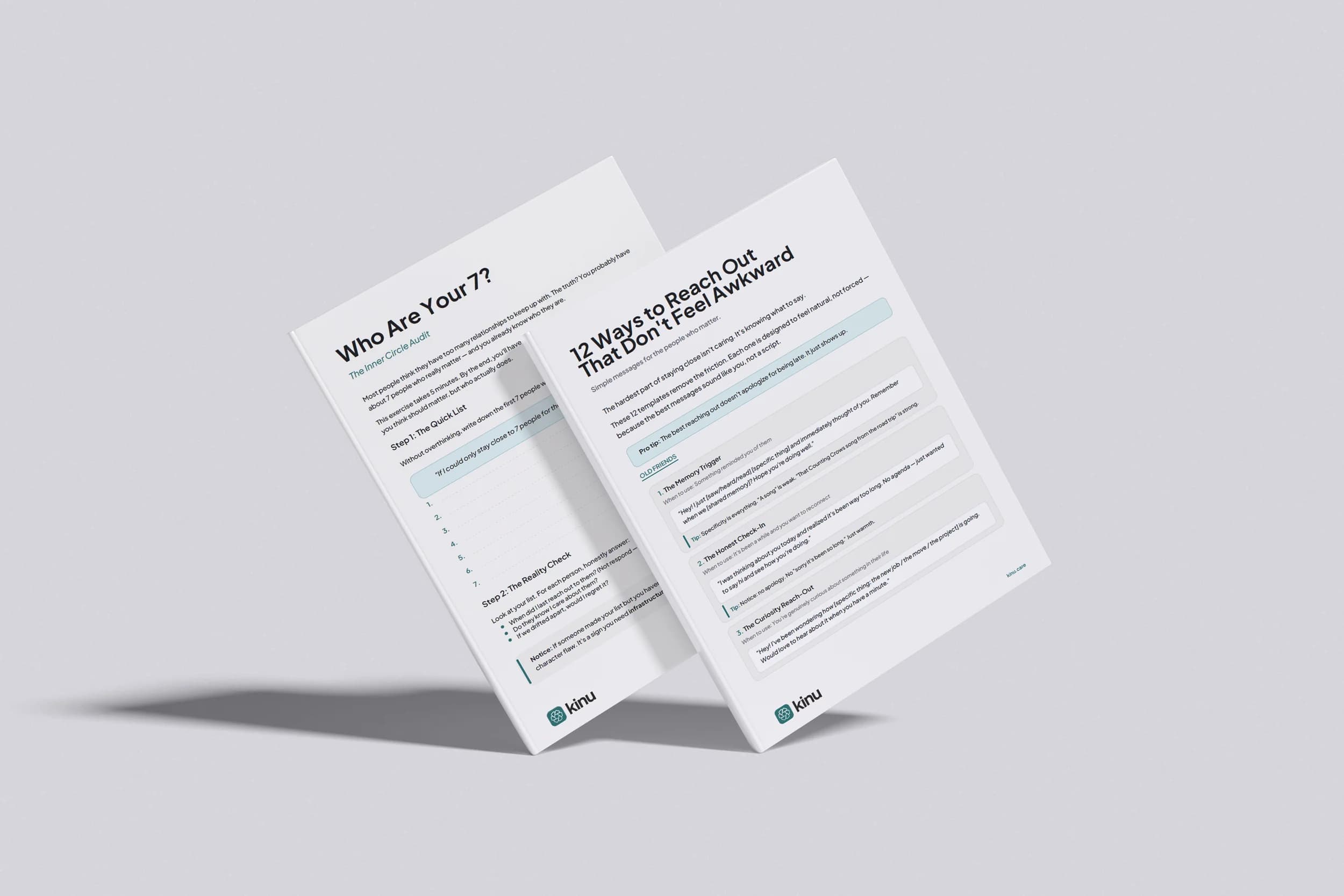
Kit de Reconexión gratis
Encuentra tu círculo cercano en cinco minutos.
Un ejercicio de 5 minutos para encontrar tu círculo cercano y 12 plantillas para escribirles sin que se sienta forzado. Gratis, descarga inmediata.
Descarga inmediata. Sin spam. Cancela cuando quieras.
Sigue leyendo
Cómo dejar de hacer doomscrolling (y qué hacer con ese tiempo)
Sabes que el doomscrolling te hace mal. Aquí está por qué es tan difícil dejarlo, qué dice la investigación sobre sus efectos, y reemplazos prácticos que perduran.
Minimalismo digital para las relaciones: usar menos tecnología para conectar más
El minimalismo digital no se trata de abandonar la tecnología. Se trata de elegir herramientas que sirvan a tus relaciones en lugar de explotar tu atención.

Las mejores herramientas y apps de minimalismo digital (2026)
Una lista curada de apps, herramientas y dispositivos que te ayudan a usar la tecnología intencionalmente. Desde herramientas de enfoque hasta apps de relaciones y hardware diseñado para la calma.