Cómo reconectar con viejos amigos (sin que sea incómodo)
Mensajes exactos para enviar, investigación sobre por qué es menos raro de lo que piensas, y cómo hacer que la reconexión perdure. Una guía completa.
Llevas semanas pensando en ellos. Tal vez meses. Has compuesto mentalmente un mensaje al menos una docena de veces. Y no lo has enviado porque perdiste el contacto, y escribirles ahora se siente incómodo.
Esto es lo que dice la investigación al respecto: la incomodidad está casi completamente en tu cabeza. Es mucho más probable que la persona al otro lado se alegre de saber de ti de lo que esperas.
A través de 13 experimentos pre-registrados con aproximadamente 5,900 participantes, investigadores liderados por Peggy Liu de la University of Pittsburgh encontraron que las personas subestiman sistemáticamente lo positivamente que se recibe el contacto inesperado. Cuanto más sorprendente el mensaje, más lo apreció el destinatario. Los destinatarios se enfocaron en el elemento sorpresa de ser contactados, lo que generó mayor aprecio del que los remitentes predecían.
Este no es un solo experimento. Son 13 estudios, replicados independientemente por el proyecto de replicación de Clearer Thinking. Un estudio separado de 2024 (Aknin y Sandstrom, Communications Psychology) encontró que el 90% de las personas han perdido el contacto con alguien que aún les importa, pero solo el 28-37% realmente envían un mensaje de reconexión incluso cuando están motivados. Tu cerebro te está mintiendo sobre esto.
Por qué reconectar se siente más difícil de lo que es
Tres mecanismos psicológicos hacen que escribir se sienta más intimidante de lo que la evidencia justifica.
El efecto de amplificación de la brecha
Tu cerebro trata la duración del silencio como proporcional al esfuerzo necesario para romperlo. Tres meses sin contacto hacen que un mensaje se sienta como que necesita ser "sustancial". Un año lo hace sentir como que necesita ser "significativo". Dos años lo hace sentir imposible. Pero el destinatario no experimenta la brecha de la misma forma. Simplemente se alegra de saber de ti.
El efecto reflector
Sobreestimamos dramáticamente cuánto los demás notan y juzgan nuestro comportamiento. Piensas que tu silencio fue notado, rastreado y usado en tu contra. En realidad, tu amigo estaba lidiando con su propia vida y apenas registró la brecha. La investigación de Thomas Gilovich y otros muestra que este efecto es generalizado en todos los contextos sociales.
La maldición del mensaje perfecto
Cuanto más esperas, más presión pones sobre el mensaje. Necesita explicar la ausencia, demostrar cariño, y ser lo suficientemente interesante para merecer una respuesta. Estos requisitos son completamente autoimpuestos. El destinatario no necesita nada de eso. Solo necesita saber de ti.
Parálisis por culpa
Irónicamente, cuanto más te importa alguien, más difícil se vuelve escribirle después de una brecha. La culpa por el silencio crea evasión, lo que crea más silencio, lo que crea más culpa. Es un ciclo que se alimenta a sí mismo. Romperlo requiere acción, no resolución.
Los investigadores han acuñado un término para este patrón: infrasocialidad. Un artículo de 2022 en Trends in Cognitive Sciences (Epley et al.) lo describió como nuestra tendencia generalizada a ser excesivamente reacios a conectar con otros debido a expectativas sociales mal calibradas. Consistentemente sobreestimamos los costos de escribir y subestimamos los beneficios.
Un estudio de 2025 (Castaneto y Aknin, Collabra: Psychology) encontró que el único predictor confiable de si alguien realmente envía un mensaje de reconexión es la "resiliencia de la amistad": la creencia de que las amistades pueden resistir el paso del tiempo. Los rasgos de personalidad, los niveles de felicidad y la soledad no predecían el comportamiento. Curiosamente, los mensajes que contenían disculpas tenían significativamente menos probabilidades de ser enviados.
La investigación sobre los lazos latentes
La psicología de la reconexión va más allá de simplemente superar la incomodidad. La investigación sobre "lazos latentes" sugiere que los viejos amigos suelen ser más valiosos de lo que pensamos.
La investigación de Levin sobre lazos latentes encontró que cuando las personas reconectaban con viejos contactos, la información y el apoyo que recibían a menudo era más valioso que lo que obtenían de sus relaciones actuales. Los lazos latentes combinan la confianza de una relación previa con la perspectiva fresca de alguien que ha estado fuera de tu mundo.
Las viejas amistades no expiran. Se vuelven latentes. Y las relaciones latentes pueden ser reactivadas más fácilmente de lo que la mayoría de la gente cree. La base de historia compartida no se erosiona como tememos.
La regla de los cinco segundos
Antes de plantillas y estrategias, aquí está el enfoque más simple posible: simplemente envíalo. No compongas el mensaje perfecto. No esperes el momento correcto. No lo pienses otra semana.
Oye, estaba pensando en ti hoy.
Siete palabras. Sin explicación por la brecha. Sin elaboración complicada. Sin presión para una respuesta específica.
Este mensaje funciona porque comunica lo único que importa: cruzaron por tu mente, y actuaste en consecuencia. Todo lo demás es secundario.
Si siete palabras se sienten demasiado escuetas, agrega un detalle específico:
Oye, estaba pensando en ti hoy. Ese podcast me recordó nuestro viaje en carretera.
La especificidad importa. Muestra que el pensamiento fue real, no un mensaje genérico de "cómo estás" enviado a diez personas a la vez.
Qué decir: mensajes para cada situación
El saludo simple (cualquier duración de brecha)
Justo estaba contando la historia de esa vez que nos perdimos en ese mercado. Me hizo sonreír. ¿Cómo estás?
Pensamiento random: extraño cuando íbamos por café. Deberíamos hacerlo otra vez.
Cuando ha pasado más de un año
La brecha es real. Tal vez sientes la necesidad de explicarla. Resiste esa urgencia. Las explicaciones largas sobre por qué has estado ocupado llaman más atención al silencio que a la conexión.
Sé que ha pasado demasiado tiempo. He estado pensando en ti y quería saludarte. Sin agenda, solo te extraño.
Esto es tardío, pero estaba escuchando esa banda que nos encantaba y me hizo pensar en ti. ¿Cómo estás?
El mensaje honesto
A veces la honestidad directa es el camino correcto, especialmente con amigos cercanos que verían a través de un mensaje casual.
Siendo honestos. He sido un pésimo amigo este año. No porque dejé de importarme, sino porque la culpa de no escribir me hizo escribir aún menos. Rompiendo ese ciclo ahora.
Te debo una disculpa por desaparecer. La vida se complicó y lo manejé quedándome callado. Te extraño y me encantaría ponernos al día si estás abierto.
Cuando algo te recordó a ellos
El mensaje basado en un detonante es el más fácil de enviar porque tienes una razón incorporada.
Acabo de pasar por ese restaurante donde tuvimos esa cena desastrosa. Todavía me hace reír. Espero que estés bien.
Cuando pasaron por algo importante
Si te enteraste de un cambio de trabajo, un bebé, una pérdida, o cualquier evento importante en sus vidas, siempre es apropiado escribir. Incluso meses después.
Me enteré de tu ascenso. Sé que llego tarde, pero quería que supieras que estoy muy contento por ti.
He estado pensando en ti desde que supe lo de tu papá. No tengo las palabras perfectas, pero quería que supieras que me importa.
La reconexión grupal
A veces es más fácil reconectar con un grupo que uno a uno. Menos presión, responsabilidad compartida.
Extraño al crew de antes. ¿Alguien se animaría a cenar este mes? Yo elijo el lugar.
La actualización de vida
Si pasaste por un cambio que explica la brecha, compartirlo puede ser a la vez vulnerable y conectivo.
Las cosas han estado locas. Ciudad nueva, trabajo nuevo, todo nuevo. Pero sigo pensando en las personas que extraño, y estás alto en esa lista. ¿Podemos ponernos al día pronto?
Qué NO hacer
No empieces con una disculpa
"Perdón que ha pasado tanto" centra la conversación en la brecha, no en la conexión. La brecha es irrelevante. La conexión es el punto. Consulta cómo escribirle a tus amigos para mejores formas de empezar.
No lo hagas un mensaje masivo
Si estás reconectando, hazlo personal. Los mensajes genéricos de "Oigan todos, estoy intentando ser mejor manteniendo el contacto" se sienten performativos, no genuinos.
No pidas algo
Si tu primer mensaje después de un año es "Oye, ¿me podrías dar tu opinión sobre algo?", señala que solo escribiste porque necesitas algo. Reconecta primero. Pide cosas después.
No prometas de más
"Pongámonos al día pronto. Deberíamos cenar." se siente bien en el momento pero crea una nueva obligación que frecuentemente no se cumple. Mejor: "Solo quería saludarte" sin ningún compromiso adjunto.
No pienses de más en el medio
Texto, DM de Instagram, correo, nota de voz. El canal importa mucho menos que el mensaje. Usa lo que se sienta más natural para esa relación específica.
No esperes el momento perfecto
No hay momento perfecto. Solo está este. El "momento correcto" es una herramienta de procrastinación disfrazada de consideración.
Después del primer mensaje
Lo envías. ¿Y luego qué?
Si responden con calidez
Este es el resultado más probable. No dejes que el impulso muera. Responde en uno o dos días. No con otro vago "deberíamos ponernos al día", sino con contenido real: una pregunta sobre su vida, una reacción a algo que compartieron, un plan concreto si se siente bien.
Si responden brevemente
No todos igualan tu energía en el primer intercambio. Una respuesta breve no es rechazo. Puede ser un día ocupado, o tal vez necesitan tiempo para procesar la sorpresa. Dale espacio e intenta de nuevo en una o dos semanas.
Si no responden
No entres en espiral. La gente pierde mensajes, se distrae, o necesita tiempo para descifrar cómo se sienten. Espera dos semanas e intenta una vez más. Si sigue el silencio, respétalo. Tú apareciste. Eso importa sin importar la respuesta.
Cuando alguien reconecta contigo
Invierte la perspectiva. Si un viejo amigo te escribe después de mucho tiempo, así puedes responder.
Responde con calidez, aunque estés sorprendido
Probablemente les costó mucho enviar ese mensaje. Una respuesta cálida no te cuesta nada y significa todo para ellos. Aunque estés ocupado, un rápido "Qué gusto saber de ti" ya es mucho.
No castigues la brecha
Evita comentarios como "Wow, me preguntaba si algún día escribirías" o "Ya era hora". Estos hacen que la otra persona se sienta juzgada por una experiencia que probablemente tú también has tenido.
Sé honesto con tu capacidad
Si genuinamente no estás en un momento para reconectar, dilo amablemente: "Me da mucho gusto que escribieras. Las cosas están intensas ahora, pero me encantaría ponernos al día cuando se calmen." Esto mantiene la puerta abierta sin crear expectativas falsas.
Hacerlo duradero (para no tener que hacer esto otra vez)
Reconectar una vez está bien. No tener que reconectar otra vez es mejor.
Las amistades que sobreviven largas brechas usualmente son aquellas donde alguien construyó un poco de estructura: un mensaje mensual, una actividad compartida, o un sistema que mantiene a las personas importantes visibles en vez de enterradas bajo la vida diaria.
El objetivo no es consistencia perfecta. Es elevar la base de "voy a pensarlo" a "tengo un sistema para esto". Incluso una pequeña cantidad de estructura previene el alejamiento que lleva a otro incómodo mensaje de reconexión seis meses después.
Considera:
- Poner un recordatorio recurrente para escribirle a tu círculo interior
- Mantener una lista simple de con quién quieres mantenerte cerca y qué está pasando en sus vidas
- Dejar que los cumpleaños hagan parte del trabajo: un sistema de recordatorios de cumpleaños te da una razón integrada y de baja presión al año para escribir
- Usar una herramienta diseñada para mantener tus relaciones para que no dependan completamente de tu memoria
- Descargar un kit de reconexión con ideas para que escribir sea más fácil
Si prefieres no cargar con el peso de "¿a quién debería escribirle?" en tu cabeza, Kinu fue creado para sostener eso por ti. Es un espacio tranquilo y privado para las personas que importan, para que la reconexión se convierta en un hábito, no en una emergencia.
Preguntas frecuentes
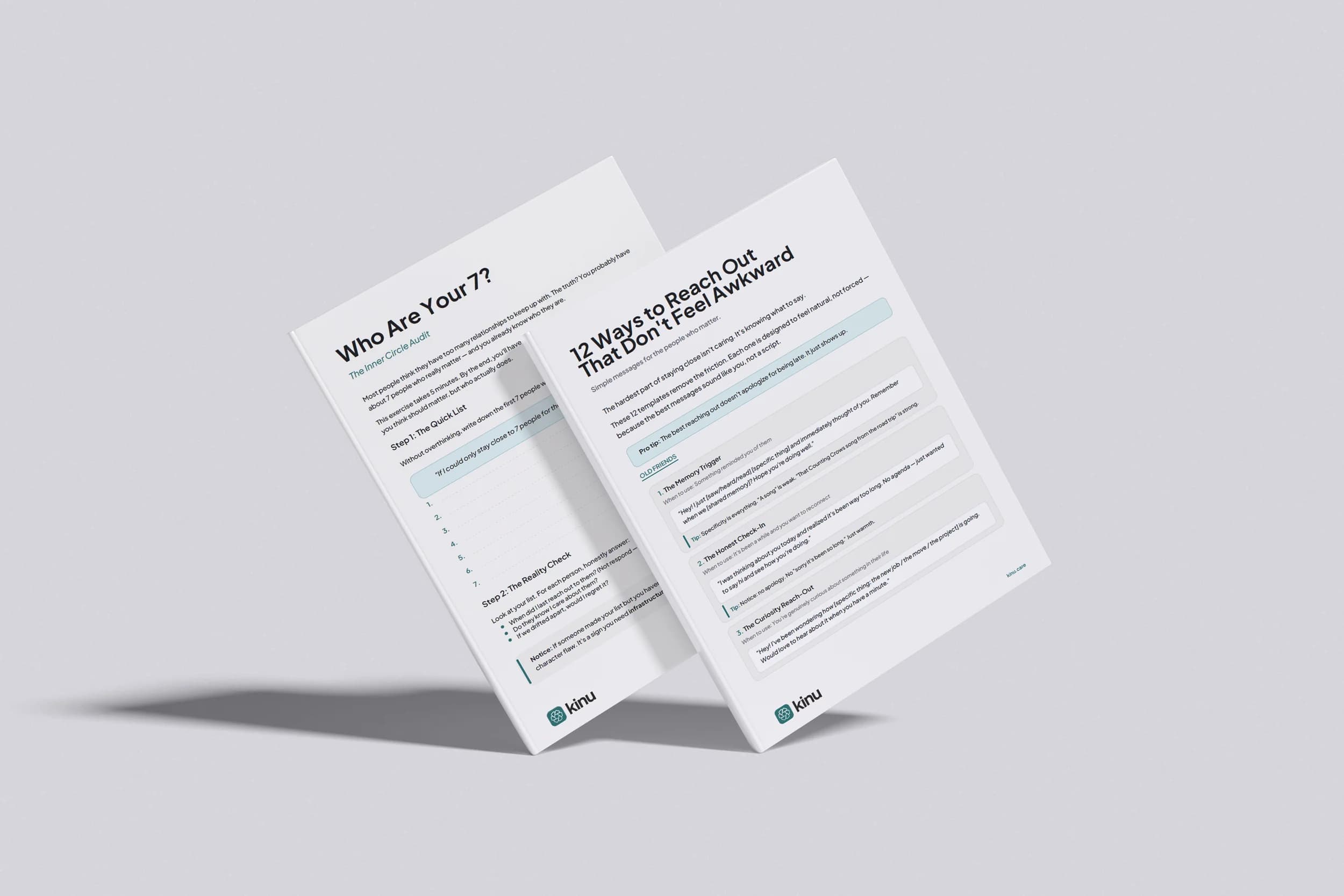
Kit de Reconexión gratis
Encuentra tu círculo cercano en cinco minutos.
Un ejercicio de 5 minutos para encontrar tu círculo cercano y 12 plantillas para escribirles sin que se sienta forzado. Gratis, descarga inmediata.
Descarga inmediata. Sin spam. Cancela cuando quieras.
Sigue leyendo

Cómo mantener tus amistades con un bebé recién nacido
El bebé no termina tus amistades. La espiral de cortesía mutua sí. Cómo conservar a tu gente a través del túnel del recién nacido, en unidades lo bastante pequeñas para sobrevivirlo.

¿Perdiendo el contacto con amigos? Por qué pasa y cómo frenarlo
Alejarte de amigos que te importan no es un defecto de carácter. Es un patrón predecible. Aquí está la ciencia detrás de esto y formas prácticas de prevenirlo.
Cómo mantener el contacto con amigos (sin que se sienta como una obligación)
Mantener el contacto no debería sentirse como una tarea pendiente. Así es como puedes hacerlo natural, con poco esfuerzo y que realmente disfrutes, incluso cuando la vida está ocupada.