¿Qué es la tecnología calmada? (Y por qué tus relaciones la necesitan)
La tecnología calmada está diseñada para requerir la menor atención posible. Aquí te contamos por qué esta filosofía importa para cómo mantienes el contacto con las personas de tu vida.
Tu teléfono vibra 80 veces al día. Tu correo nunca para. Cada app lucha por un trozo de tu atención, optimizada, probada con tests A/B y diseñada para mantenerte enganchado el mayor tiempo posible.
Ahora pregúntate: ¿cuál de esas apps realmente hace tu vida más tranquila?
La tecnología calmada es una filosofía de diseño construida sobre una idea radical: la tecnología debe servirte sin exigir tu atención. Debe funcionar en segundo plano, mantenerse en silencio a menos que sea necesario y nunca crear más estrés del que resuelve.
El concepto existe desde mediados de los años 90, cuando investigadores de Xerox PARC acuñaron el término. Pero ha cobrado nueva urgencia en una era donde la persona promedio revisa su teléfono 96 veces al día y la atención se ha convertido en el recurso más disputado de la economía.
Los principios de la tecnología calmada
Amber Case, una de las voces más destacadas en este espacio, destiló la tecnología calmada en un conjunto de principios que se leen como lo opuesto de la mayoría del software moderno:
La menor atención posible
Las mejores herramientas te informan sin interrumpirte. Piensa en una tetera que silba cuando el agua hierve. No te exige que la mires todo el tiempo.
Usa la periferia
La información debería vivir al borde de tu conciencia, disponible cuando la quieras pero sin gritar por atención. Un reloj en la pared es tecnología calmada. Una notificación que vibra en tu muñeca cada 15 minutos no lo es.
Amplifica lo humano
El objetivo no es reemplazar el juicio o la conexión humana. Es apoyarla, hacer más fáciles las cosas que ya quieres hacer.
Respeta las normas sociales
La buena tecnología no te hace descortés. No te saca de conversaciones, no exige que respondas inmediatamente ni crea ansiedad social por los tiempos de respuesta.
El Calm Tech Institute
Lanzado con una especificación de 81 puntos para certificar productos como 'Calm Tech Certified'. Productos como la tableta reMarkable y la Daylight Computer han sido de los primeros en recibir esta designación.
La especificación cubre diseño de notificaciones, privacidad de datos, demandas de atención y autonomía del usuario. Es un intento de crear estándares industriales para tecnología que respeta la atención humana, un contrapeso al modelo de maximización del engagement que domina Silicon Valley.
La existencia del Instituto señala algo importante: esta no es solo una filosofía de nicho. Se está convirtiendo en un movimiento industrial. Y es particularmente relevante para cómo pensamos sobre mantenernos conectados con las personas.
Por qué las relaciones necesitan tecnología calmada
Aquí está la paradoja: las herramientas diseñadas para mantenernos conectados son algunas de las tecnologías menos calmadas que usamos. Y la investigación es clara: las redes sociales nos están haciendo más solitarios, no más conectados.
Las plataformas de redes sociales están diseñadas para el engagement, no para la conexión. Recompensan la difusión por encima de la intimidad, y sus sistemas de notificaciones están diseñados para jalarte de vuelta constantemente, no porque necesites estar ahí, sino porque su modelo de negocio depende de tu atención.
Incluso las apps diseñadas específicamente para relaciones, gestores de contactos, CRMs personales, rastreadores de amistades, a menudo replican los mismos patrones:
Notificaciones que generan culpa
"No has contactado a Sarah en 14 días" crea ansiedad en lugar de motivación genuina para conectar.
Contadores de rachas
Castigar la ausencia rompiendo tu racha convierte las relaciones en un juego que puedes perder.
Paneles de métricas
Convertir tus amistades en números para optimizar elimina el elemento humano por completo.
Demandas constantes
Apps que requieren atención diaria se convierten en otra fuente de estrés, no de alivio.
El resultado: las herramientas que deberían hacer las relaciones más fáciles a menudo las hacen sentir como trabajo.
La tecnología calmada aplicada a las relaciones
La tecnología calmada aplicada a las relaciones se ve fundamentalmente diferente:
Notificaciones que informan, no interrumpen
En lugar de "No has contactado a Sarah en 14 días" (que genera culpa), un enfoque calmado podría mostrar el nombre de Sarah en un espacio tranquilo cuando abres la app. Visible pero no urgente.
Modos que respetan tu ancho de banda
Algunas semanas estás plenamente presente. Otras apenas sobrevives. La tecnología calmada de relaciones te permite ajustar qué tan presente está la herramienta en tu vida, sin castigarte por dar un paso atrás.
La privacidad como principio de diseño
Si vas a guardar pensamientos privados, sentimientos y notas sobre las personas más cercanas a ti, esos datos deberían vivir en un lugar que respete su sensibilidad. El almacenamiento local y la encriptación antes de sincronizar no son casillas de marketing. Son la forma en que la tecnología calmada dice "tu vida interior es tuya".
Sin urgencia fabricada
Rachas, puntajes y "métricas de salud" para tus relaciones crean ansiedad donde no necesita existir. Un enfoque calmado confía en que te involucrarás a tu propio ritmo y apoya esa participación sin gamificarla.
Cómo se ve la tecnología calmada de relaciones
Imagina una app que funcione así:
La abres cuando quieres, no porque una notificación te arrastró hasta ella. Ves a las personas que te importan, organizadas de una forma que refleja qué tan cerca te sientes de ellas. Si alguien ha estado en tu mente, puedes capturar ese pensamiento en una nota privada. Si no te has conectado con alguien en un tiempo, lo notas de forma natural a través del diseño de la app, no a través de una alarma. Es cómo ser más intencional con las relaciones sin añadir estrés.
En tu teléfono, es ligera. Un vistazo rápido, un breve momento de conexión, luego la cierras y sigues con tu día. En tu computadora, es más profunda. Espacio para reflexionar, para escribir, para entender cómo están evolucionando tus relaciones con el tiempo.
Sin feed que recorrer. Sin métricas que optimizar. Sin rendimiento que mantener. Solo un espacio tranquilo para las personas que importan.
Esto no es hipotético. Esta es la filosofía de diseño detrás de una nueva generación de herramientas de relaciones, y detrás de Kinu específicamente.
El panorama general
La tecnología calmada no es anti-tecnología. Es pro-humano. Reconoce que creamos herramientas para que nos sirvieran, y en algún punto del camino la relación se invirtió. Ahora servimos a nuestras herramientas, alimentándolas con atención, datos y tiempo que podríamos dedicar a las cosas que realmente importan.
Las personas en tu vida no necesitan que seas más productivo en las relaciones. Necesitan que estés más presente. Y la presencia requiere el tipo de atención que es imposible cuando cada app en tu bolsillo compite por ella. Por eso el minimalismo digital se está volviendo esencial para la conexión real.
Elegir tecnología calmada es elegir una relación diferente con tus dispositivos, una que deja espacio para las relaciones que más importan.
Preguntas frecuentes
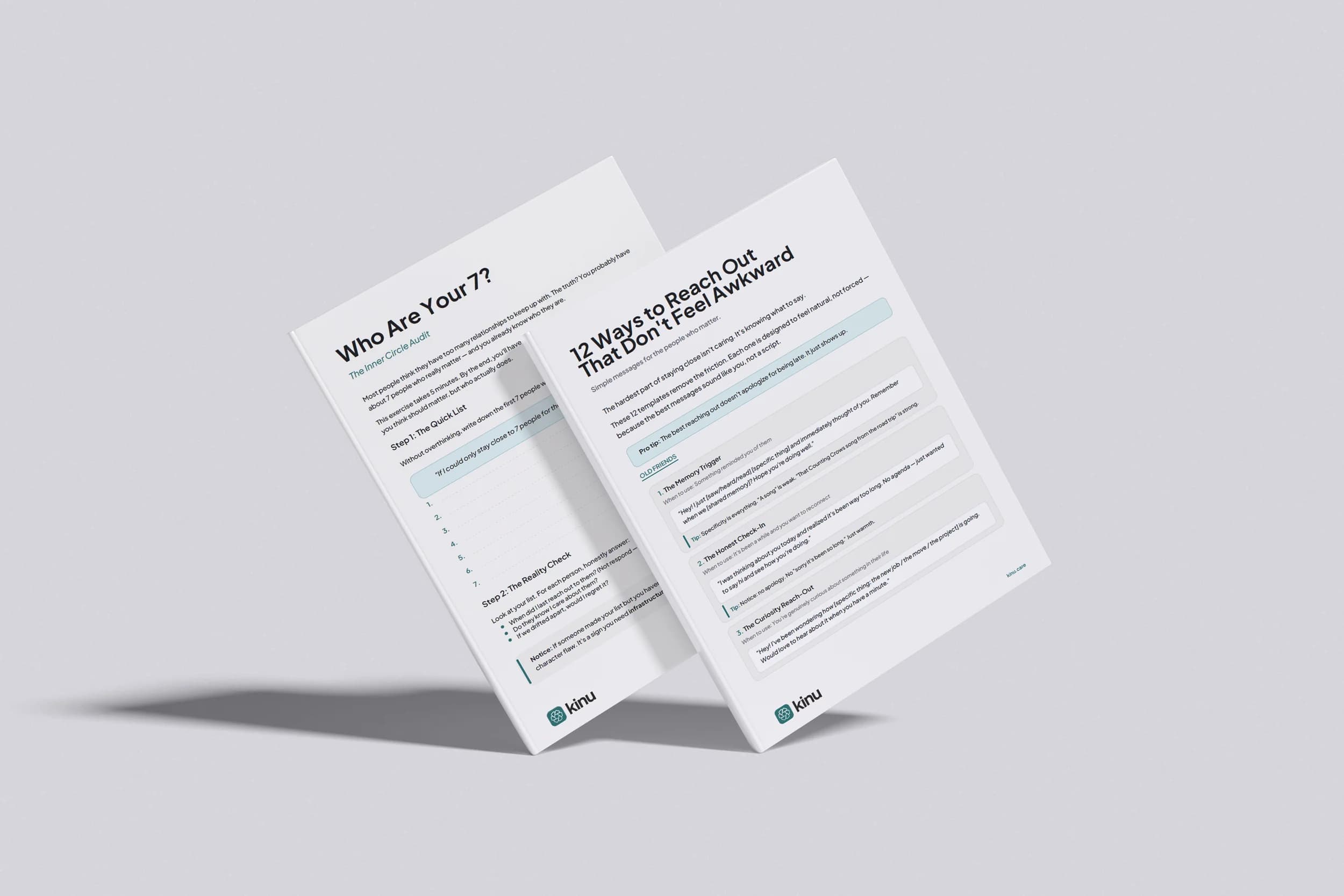
Kit de Reconexión gratis
Encuentra tu círculo cercano en cinco minutos.
Un ejercicio de 5 minutos para encontrar tu círculo cercano y 12 plantillas para escribirles sin que se sienta forzado. Gratis, descarga inmediata.
Descarga inmediata. Sin spam. Cancela cuando quieras.
Sigue leyendo

Quiet quitting en redes sociales: cómo retirarte sin desaparecer
No tienes que borrar todo dramáticamente. Así puedes reducir silenciosamente tu uso de redes sociales mientras mantienes las conexiones que realmente importan.
Cómo dejar de hacer doomscrolling (y qué hacer con ese tiempo)
Sabes que el doomscrolling te hace mal. Aquí está por qué es tan difícil dejarlo, qué dice la investigación sobre sus efectos, y reemplazos prácticos que perduran.

Por qué creé Kinu: los veranos junto al mar y las pequeñas cosas
Dos meses al año en la costa croata me enseñaron cómo es la amistad en su mejor momento. Aquí cuento por qué construí Kinu, y para quién.